Market statistics
- Total volume
- $37.8M
- 24h volume
- $545K
- Liquidity
- $187K
- Open interest
- $4.2M
- Comments
- 3
Platform comparison
| Platform | YES odds | NO odds | Fee | KYC | Settlement | |
|---|---|---|---|---|---|---|
Polymarket (via PolyGram) Pick polygram.ink (preferred broker) |
0% | 100% | 0% (USDC on-chain) | No-KYC up to $1,500 | USDC, auto via UMA oracle | Trade this market → |
Polymarket (direct) polymarket.com |
0% | 100% | 0% | Geo-blocked in US/UK/EU | USDC, on-chain | Trade this market → |
Kalshi kalshi.com |
— | — | Up to 7% per trade | US-only, KYC required | USD | Trade this market → |
Betfair Exchange betfair.com |
— | — | 2-5% commission | Full KYC from first trade | GBP / EUR | Trade this market → |
Manifold Markets manifold.markets |
— | — | Play-money (mana) | None — play-money | Mana (no cash-out) | Trade this market → |
Outcome snapshot
Current YES/NO probability from the live order book.
Market context
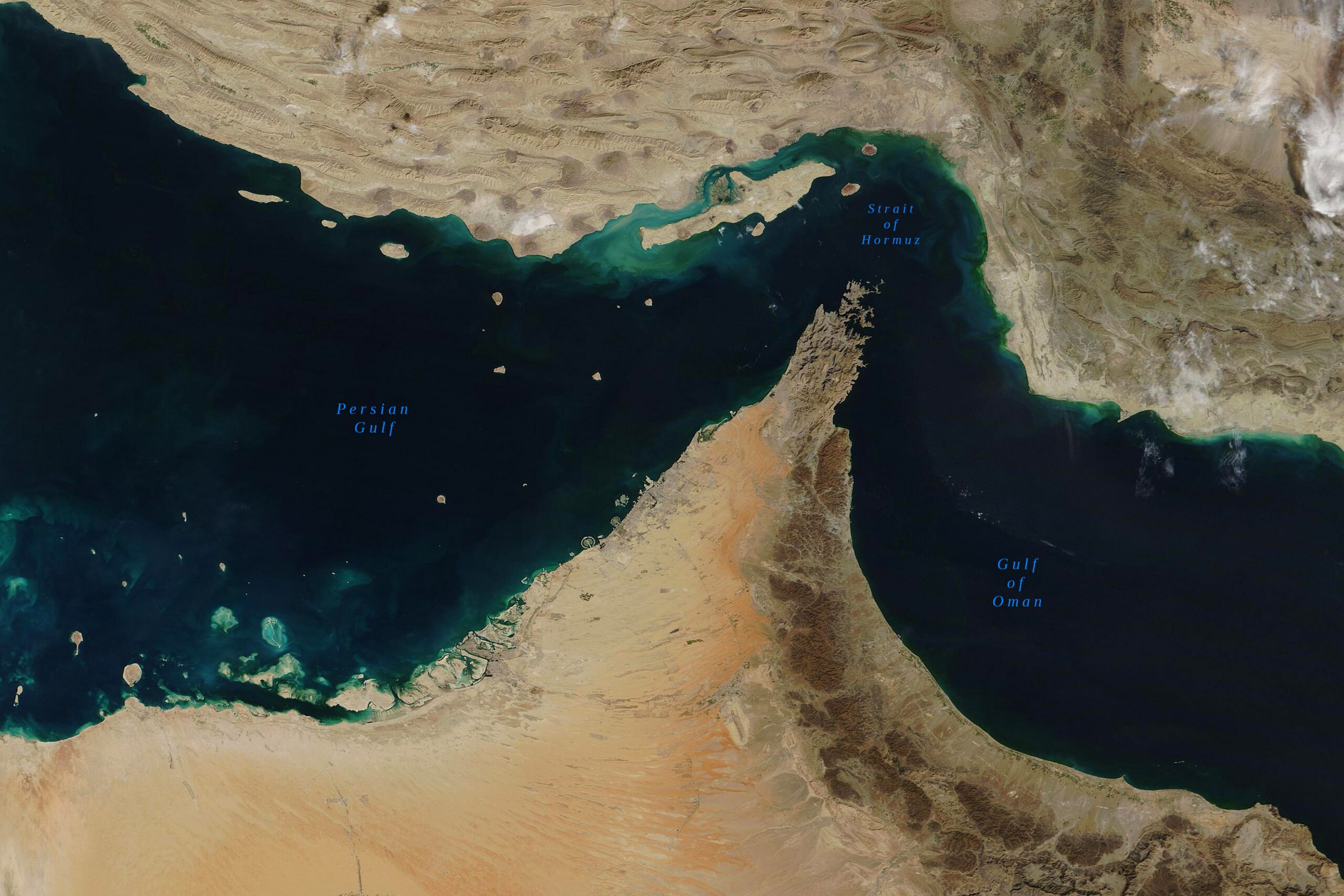
The Strait of Hormuz handles roughly one-third of global seaborne oil trade, making transit volumes a sensitive indicator of regional stability and energy markets. The 7-day moving average threshold of 60 daily transit calls represents a return to pre-disruption baseline traffic. Recent years have seen the corridor experience multiple shocks: the January 2024 Houthi attacks on shipping prompted temporary diversions around the Cape of Good Hope, whilst geopolitical tensions periodically suppress transit numbers. IMF Portwatch data captures all vessel classes transiting the waterway, providing granular daily counts that traders can monitor programmatically via their data feeds.
Historical precedent suggests recovery timelines vary sharply depending on disruption severity. The 2019 tanker attacks saw transit volumes rebound within weeks once insurers and operators reassessed risk. Conversely, sustained geopolitical friction—such as the 2022 Russia-Ukraine spillover effects on energy routing—produced multi-month suppression. Current crowd probability of 0% reflects either persistent risk perception or baseline assumptions that normalisation will not occur within the 16-month window. Traders evaluating this market should establish automated alerts on IMF Portwatch releases and cross-reference against shipping indices, insurance premium movements, and regional security announcements from the US Fifth Fleet.
Key catalysts include any ceasefire agreements affecting Houthi operations, shifts in US or Iranian policy, and insurance market repricing. Conditional order logic could trigger on specific geopolitical news wires or when 5-day rolling averages approach 55, allowing systematic entry if momentum builds toward the 60-call threshold.
Wikipedia Context
-
 Strait of Hormuz
The Strait of Hormuz is a waterway between the Persian Gulf and the Gulf of Oman. On the north coast lies Iran, and on the south coast lies the Musandam Peninsula under the Musandam Governorate of Oman, with a portion of the southwest of the peninsula under the United Arab Emirates. The strait is about 104 miles long, with a width varying from about 60 mi to
-
 Battle of the Strait of Hormuz (1553)
The Battle of the Strait of Hormuz was fought in August 1553 between an Ottoman fleet, commanded by Admiral Murat Reis, against a Portuguese fleet of Dom Diogo de Noronha. The Turks were forced to retreat after clashing with the Portuguese.
-
 2026 Strait of Hormuz crisis
Shipping traffic through the Strait of Hormuz, a major maritime choke point for world energy trade, has been largely blocked by Iran since 28 February 2026, when the United States and Israel launched an air war against Iran and assassinated its supreme leader Ali Khamenei. In retaliation, Iran launched missile and drone attacks on Israel, US military bases,
Methodology
Methodologically we separate two layers: the live probability (Polymarket mid-price) and the platform attributes (fee, KYC, settlement currency, payment rails). That keeps the comparison honest — a single canonical probability across the row, with the venue-by-venue trade-offs spelt out in the columns next to it.
Resolution & payout
At resolution the UMA oracle takes over: a proposer posts the outcome with a bond, any token holder can dispute within two hours. Without dispute the result is accepted and the smart contract distributes USDC instantly.
On Kalshi (CFTC-regulated) resolution runs through their in-house clearing engine in USD. Betfair Exchange settles after match end in the account's local currency. Manifold pays no cash — only its in-platform "mana" currency.
FAQ
- Where can I trade this market with the lowest fees?
- Polymarket is geo-blocked in the US/UK/EU. The easiest 0%-fee broker into the same order book is PolyGram. Kalshi charges up to 7% per trade; Betfair Exchange takes 2-5% commission on net winnings.
- How does resolution work?
- Through the UMA Optimistic Oracle on Polygon: a proposer submits the outcome, a two-hour challenge window opens, and USDC payouts settle automatically once the result is final.
- What's the difference between YES and NO shares?
- A YES share pays $1.00 if the event happens, $0 otherwise. A NO share pays $1.00 if the event doesn't happen. The market price between 0¢ and 100¢ is the implied probability.
- Do I need to KYC for this market?
- On Polymarket directly, no — it's wallet-based. Intermediary brokers like PolyGram trigger KYC only above $1,500 of lifetime trading volume; under that you trade pseudonymously with a single wallet address.
- How reliable are the quoted odds?
- The YES/NO percentages are the live mid-prices of the Polymarket order book. On deep markets they move every few seconds; on thinner ones you'll see short plateaus.
Trade Strait of Hormuz traffic returns to normal by end of… on PolyGram
Live order book, 0% fees, USDC settlement in seconds.
Open live market →